
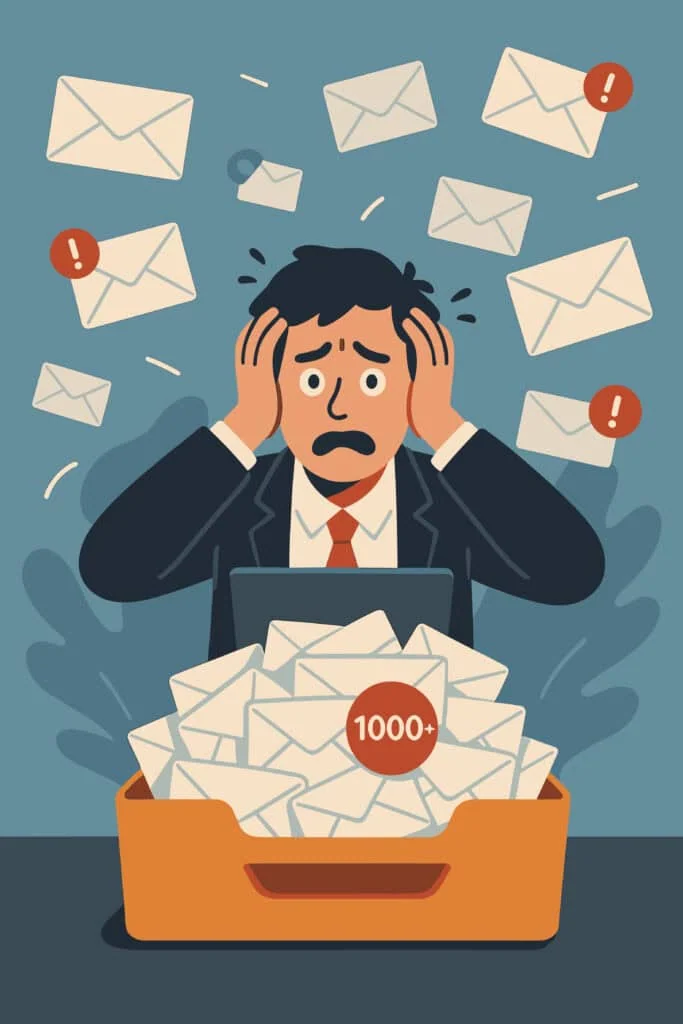
How digital noise is draining productivity, and what organizations can do to fix it.
In the quest to stay connected, today’s workplace has accidentally created a new productivity killer: notification overload. Between Teams pings, Slack alerts, email pop‑ups, meeting reminders, app badges, and mobile alerts, employees are being interrupted dozens, sometimes hundreds, of times per day.
The result?
Lower focus. Higher stress. Stalled projects. Unhappy teams.
Digital tools were meant to streamline communication, not overwhelm people with it. But without structure and intentionality, the noise becomes constant and costly.
Let’s break down why notification overload is eroding productivity and morale, and what companies can do to reverse the trend.
1. Constant Alerts Destroy Deep Work
Every beep, banner, ping, and pop‑up pulls employees out of their cognitive “flow.” Even short interruptions of five seconds here, or ten seconds there, force the brain to restart tasks, rebuild context, and regain momentum.
Multiply that across a full workday, and it becomes clear:
Teams aren’t struggling with capability, they’re struggling with concentration.
Uncontrolled notifications create an environment where:
- People multitask instead of focusing
- Work becomes reactive instead of strategic
- Complex thinking takes a backseat to quick replies
- Employees feel “always on,” even outside work hours
Even the best tools can’t fix the fact that nobody can produce their best work while being interrupted every three minutes.
2. Digital Noise Raises Stress and Burnout
When everything feels urgent because everything is interrupting you, the psychological toll builds fast.
Teams report:
- Anxiety when unread badges pile up
- Guilt when they miss a message
- Pressure to respond instantly
- Exhaustion from constant context‑switching
- Feeling “behind” even when they’re not
It’s not the tools themselves causing stress, it’s the unmanaged volume.
What starts as a simple alert slowly becomes a source of chronic tension.
And morale doesn’t drop because people hate their jobs.
It drops because their work environment feels chaotic, overwhelming, and unstructured.
3. Collaboration Tools Become Noise Generators Instead of Productivity Engines
Slack, Teams, Asana, and similar apps are powerful when used intentionally.
Without guidance, organizations end up with:
- Too many channels
- Too many @mentions
- Too many group chats
- Too many redundant alerts
- Too many apps competing for attention
Over-notification creates a culture where everything feels equally urgent, so nothing truly is.
This limits the impact of the very tools companies invest in to improve collaboration.
Instead of enabling clarity, the platforms become a digital traffic jam.
4. The Fix: Build a Healthy Notification Culture
The solution isn’t “fewer tools.”
It’s better rules, better habits, and better configuration.
Here are practical, high‑impact steps companies can take:
1) Establish Notification Norms
Create shared expectations for:
- Response times (not everything is immediate)
- When to use @mentions vs. general posts
- When to send chats vs. emails vs. posts
- Quiet hours and do‑not‑disturb policies
Culture shapes behavior, so you have to set the tone.
2) Reduce Channel Sprawl
Standardize:
- Channel naming
- Channel purposes
- Who belongs where
- What gets communicated where
If people don’t know where information lives, they’ll rely on alerts for everything.
3) Train Employees to Take Control of Their Settings
Most employees have never customized:
- Notification filters
- Priority contacts
- Quiet hours
- Device syncing
- Meeting mode settings
Teach teams how to turn tools into assets, not interruptions.
4) Encourage Deep‑Work Blocks
Protect focus time across the company:
- Allow calendar‑blocked focus hours
- Normalize delayed responses
- Reduce unnecessary meetings
- Prioritize asynchronous communication when possible
People can’t innovate in a state of constant interruption.
5) Use Automation Carefully
Automations and integrations should support work, not spam everyone.
Audit them regularly to remove:
- Redundant alerts
- Duplicated reminders
- Auto-generated noise
More data does not equal better insight.
The Real Message: Protecting Focus Is Protecting People
Notification overload isn’t just a productivity issue, it’s a morale issue, a mental health issue, and a retention issue.
Employees want clarity, not chaos.
Focus, not fragmentation.
Tools that support their work, not interrupt it.
When organizations intentionally reduce digital noise and establish clear communication norms, the positive impact is immediate:
✨ More focus
✨ More meaningful work
✨ Less burnout
✨ Stronger collaboration
✨ Happier teams
You don’t need fewer tools.
You need a healthier relationship with them.

